

When it comes to sharing snacks with furry friends, the question often arises: can dogs eat sweet peppers? While your pup might give you those adorable puppy eyes as you munch on a crunchy pepper, it’s essential to know what’s safe for them. After all, not every human treat is a dog-approved delight.
Can Dogs Eat Sweet Peppers?
Sweet peppers are safe for dogs to consume in moderation. These vibrant vegetables contain essential vitamins and nutrients. Dogs can benefit from vitamin A, vitamin C, and antioxidants found in sweet peppers.
Cutting sweet peppers into small pieces can prevent choking hazards. Removing seeds and the stem is crucial for safe consumption. Serving them raw can retain their nutrient value, but cooking can also make them easier to digest.
Allergies or sensitivities can occur, although they are rare. Monitoring for adverse reactions after introducing sweet peppers is important. If any unpleasant symptoms arise, discontinue feeding them.
Feeding sweet peppers as treats can provide a healthy alternative to commercial snacks. They can be mixed with other dog-friendly foods for balanced nutrition. Many dogs enjoy the crunchy texture and mild flavor of sweet peppers.
Offering a variety of colors, such as red, yellow, or green, adds visual appeal and diversity to a dog’s diet. Each color has different nutritional values, enhancing overall health benefits.
Consulting a veterinarian before making dietary changes is advisable. Professional guidance ensures that any new food aligns with a dog’s health needs. Sweet peppers can be a colorful addition to a dog’s bowl when introduced correctly.
Nutritional Benefits of Sweet Peppers
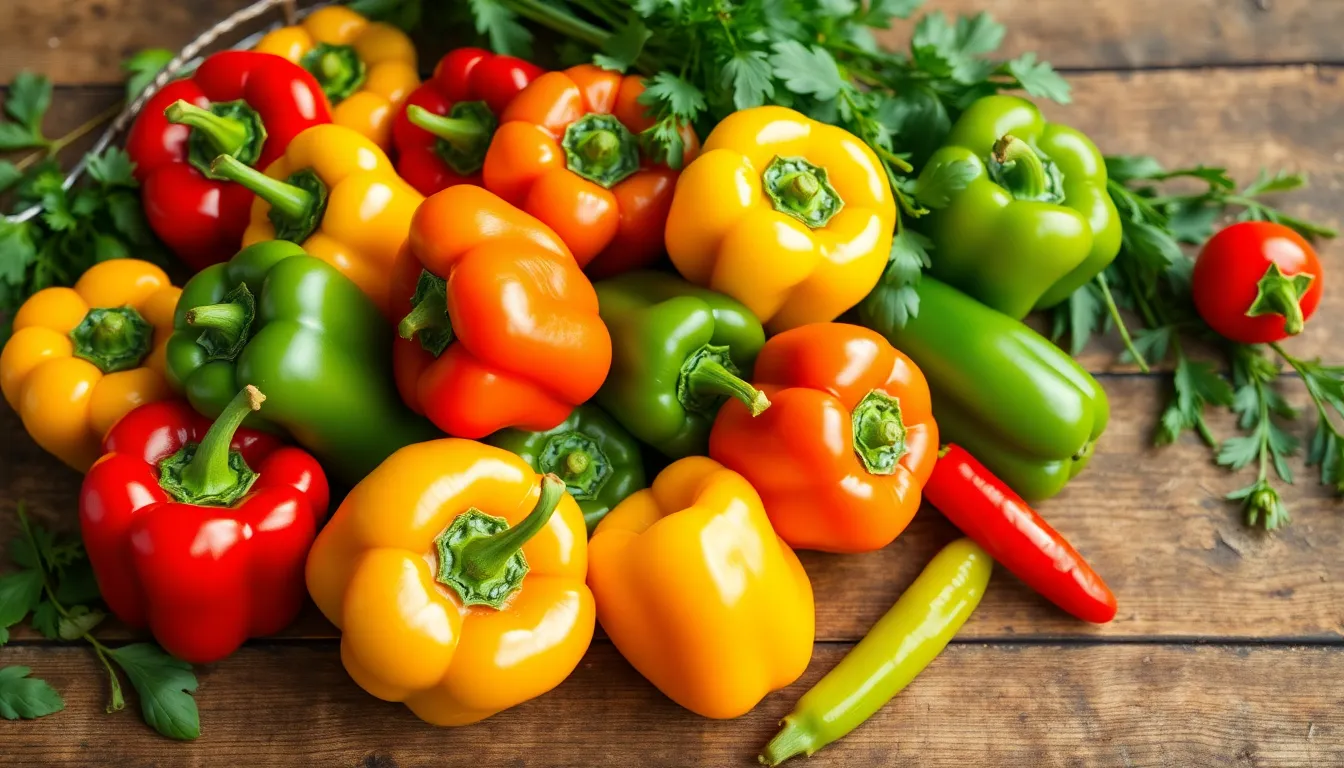
Sweet peppers offer multiple nutritional advantages for dogs. These colorful vegetables contribute essential vitamins and minerals necessary for overall health.
Vitamins and Minerals
Sweet peppers contain high levels of vitamin A, promoting healthy eyesight. Vitamin C supports a strong immune system and aids in maintaining overall vitality. Additionally, these peppers supply significant amounts of potassium, essential for nerve function and muscle health. Including sweet peppers in a dog’s diet provides necessary nutrients while offering a low-calorie snack option. Each color of sweet pepper, whether red, yellow, or green, contains varying nutrient profiles, enhancing meal variety.
Antioxidants and Health Benefits
Antioxidants found in sweet peppers protect cells from damage. These compounds, particularly carotenoids, play a crucial role in reducing inflammation. Enhanced health and lowered risk of chronic diseases result from this protective effect. Regular consumption of sweet peppers may promote better skin health and a shinier coat. Including them in meals creates an appealing visual and provides additional health benefits. Moreover, antioxidants support a dog’s overall well-being as part of a balanced diet.
Potential Risks of Feeding Sweet Peppers to Dogs
Feeding sweet peppers to dogs carries potential risks that owners should consider. Understanding these risks helps in making informed choices about their pets’ diets.
Digestive Issues
Digestive issues may arise when dogs consume sweet peppers, particularly if introduced suddenly or in large amounts. Symptoms such as gas, bloating, or diarrhea may occur with excessive consumption. Cutting peppers into small pieces reduces the risk of choking and eases digestion. Offering small portions allows dogs to adjust to new foods gradually. Each dog’s digestive system varies, so monitoring for any adverse reactions after feeding is crucial. Some dogs might not tolerate sweet peppers well, especially if they already have sensitive stomachs or existing gastrointestinal conditions. Observing your dog’s behavior after eating can provide insights into their tolerance for sweet peppers.
Allergic Reactions
Allergic reactions, though rare, can happen when dogs consume sweet peppers. Signs like itching, hives, or gastrointestinal discomfort may indicate an allergy. Certain breeds may exhibit higher sensitivity to different foods. If a dog shows any of these symptoms after eating sweet peppers, consulting a veterinarian is essential. Avoiding sweet peppers entirely may be necessary if allergies seem likely. Introducing any new food gradually remains a wise practice to monitor for potential reactions. Dogs that have known food allergies or sensitivities warrant particular caution when trying sweet peppers. Understanding individual dietary needs and concerns supports better health outcomes for pets.
How to Safely Introduce Sweet Peppers to Your Dog’s Diet
Introducing sweet peppers into a dog’s diet requires careful preparation and attention to portion sizes. Following proper guidelines ensures that dogs enjoy the benefits without adverse effects.
Preparation and Serving Suggestions
Start by thoroughly washing sweet peppers to remove any pesticides. Removing the seeds and stems contributes to a safer experience. Aim to cut the peppers into small, manageable pieces to prevent choking risks. Dogs may prefer raw peppers, but lightly steaming them can enhance digestibility. Try mixing sweet pepper pieces with dog food or using them as training treats to add variety. Offering different colors—like red, yellow, and green—appeals visually while benefiting overall health. Always monitor the dog’s reaction upon introduction to assess preferences and tolerances.
Portion Control Guidelines
Begin with small amounts when introducing sweet peppers, especially for the first time. A few small slices can determine how the dog responds. Aim for no more than 10% of the dog’s daily caloric intake from new treats like sweet peppers. Adjust portions based on the dog’s size, age, and activity level. Always watch for any signs of digestive issues, such as gas or diarrhea. If there’s any adverse reaction, reducing the portion size or eliminating sweet peppers altogether may be necessary. Gradual introduction ensures a positive experience while allowing the dog to enjoy this nutritious snack safely.
Alternative Vegetables for Dogs
Dogs can enjoy a variety of vegetables that provide essential nutrients and health benefits. Carrots serve as a crunchy treat packed with beta-carotene, promoting healthy eyesight. Green beans are another excellent choice, offering fiber and low calories, which can aid in weight management.
Broccoli, when served in moderation, delivers vitamin C and fiber, helping to support immune function. Cucumbers are refreshing and hydrating, ideal for hot days, and they add a satisfying crunch to a dog’s diet. Peas also act as a nutrient-rich snack, providing protein and vitamins A, B, and K.
Zucchini provides dogs with hydration and essential vitamins while being low in calories. Pumpkin, particularly canned or cooked (without additives), aids digestion and is rich in fiber, making it beneficial for gastrointestinal health. Spinach contains iron, calcium, and antioxidants, contributing to overall vitality.
Instead of serving large portions, owners should chop vegetables into manageable pieces to avoid choking hazards. Cooking certain vegetables, like carrots and broccoli, enhances digestibility while retaining nutritional value. Dogs may appreciate a mix of these vegetables in their meals, diversifying their diets.
Veterinarians suggest introducing new vegetables gradually to monitor reactions. Digital resources or reliable vet guidance can facilitate informed changes to a dog’s diet, ensuring well-being. This variety not only keeps meals interesting but also utilizes different nutrient profiles for a balanced approach.
Sweet peppers can be a nutritious addition to a dog’s diet when introduced properly. They offer essential vitamins and antioxidants that contribute to overall health. Owners should ensure that sweet peppers are prepared safely by removing seeds and stems and cutting them into small pieces. Monitoring for any adverse reactions is crucial, especially for dogs with sensitive stomachs. By incorporating sweet peppers in moderation alongside other dog-friendly vegetables, pet owners can provide a varied and balanced diet. This not only enhances their dog’s meals but also supports their well-being in a delicious way.